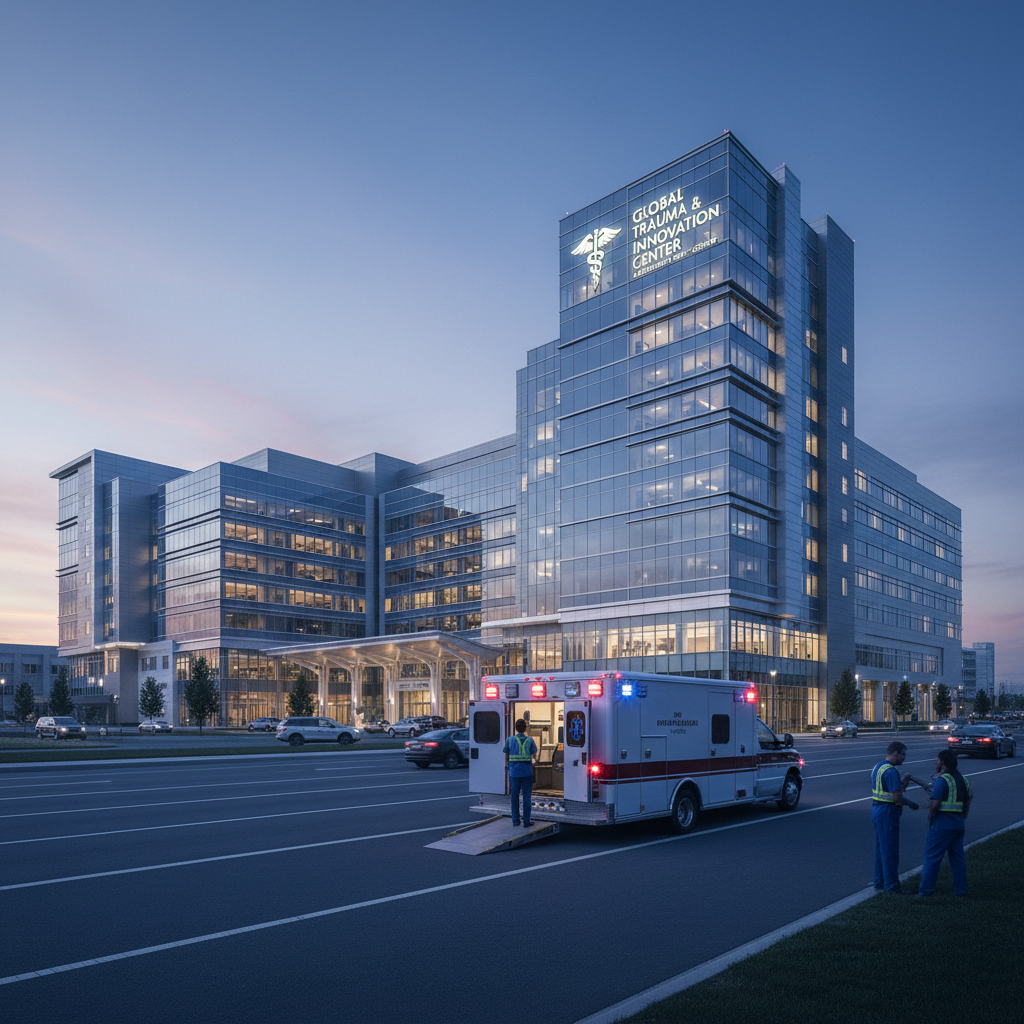
When seconds count, the difference between life and death often comes down to the quality of emergency trauma care. Serious injuries from car accidents, falls, or violent incidents require immediate, expert intervention. Not all hospitals are equipped to handle the most severe trauma cases, which is why Level I Trauma Centers exist—facilities that maintain the highest level of readiness, resources, and expertise around the clock.
But what makes one trauma center better than another? And when you or a loved one needs critical care, how can you ensure you’re at the right place?
This guide explores the best hospitals for emergency trauma care across the United States. We’ll examine what sets top-tier trauma centers apart, highlight leading institutions, and explain the innovations that are transforming how these facilities save lives. Whether you’re researching care options for yourself or simply want to understand the landscape of emergency medicine, this article will equip you with the knowledge you need.
What Makes a Trauma Center Excellent?
The American College of Surgeons (ACS) sets rigorous standards for trauma care facilities through its verification program. Hospitals must meet specific criteria to achieve Level I designation, the highest tier of trauma care.
Level I Trauma Centers provide comprehensive care for all types of injuries, 24 hours a day, 365 days a year. These facilities maintain:
- Immediate availability of specialized surgeons in disciplines including general surgery, neurosurgery, orthopedic surgery, and cardiothoracic surgery
- On-site intensive care units staffed by physicians experienced in critical care
- Advanced diagnostic capabilities, including CT scanners, MRI machines, and interventional radiology suites
- Robust blood banks that can rapidly provide massive transfusions when needed
- Dedicated trauma research programs that contribute to advancing the field
- Continuous quality improvement protocols that analyze outcomes and refine practices
Beyond these baseline requirements, the best trauma centers distinguish themselves through innovation, patient outcomes, response times, and the depth of their specialized services.
The Nation’s Leading Trauma Centers
Three institutions consistently rank among the finest trauma care providers in the United States: Mayo Clinic, Massachusetts General Hospital, and Johns Hopkins Hospital. Each brings unique strengths to emergency medicine.
Mayo Clinic
With locations in Rochester, Minnesota; Phoenix, Arizona; and Jacksonville, Florida, Mayo Clinic operates three Level I Trauma Centers that epitomize coordinated, patient-centered care.
Mayo’s trauma program excels in multidisciplinary collaboration. When a patient arrives with multiple severe injuries, specialists from different fields converge within minutes to develop and execute a unified treatment plan. This team-based approach minimizes delays and ensures that every aspect of a patient’s condition receives expert attention.
The Rochester campus handles over 3,000 trauma activations annually. Its neurotrauma team has pioneered techniques in managing traumatic brain injuries, while its burn center provides specialized care for thermal injuries. Mayo’s investment in simulation training means that staff regularly practice responding to rare but catastrophic scenarios, maintaining readiness for any situation.
Massachusetts General Hospital
Located in Boston, Massachusetts General Hospital (MGH) is the oldest and largest hospital in New England, and its trauma center serves as a regional hub for the most complex cases.
MGH’s emergency department sees approximately 110,000 visits each year, with thousands classified as trauma cases. The hospital’s location near major highways and its helipad allow rapid access for patients throughout the region.
What sets MGH apart is its research integration. The hospital’s trauma surgeons frequently collaborate with scientists at Harvard Medical School to translate laboratory discoveries into clinical practice. Recent innovations include advanced hemorrhage control techniques and new protocols for managing crush injuries.
The facility also houses one of the nation’s premier burn units, treating patients with severe thermal, chemical, and electrical injuries. Its rehabilitation programs help trauma survivors regain function and return to their lives.
Johns Hopkins Hospital
Baltimore’s Johns Hopkins Hospital has earned its reputation through decades of medical breakthroughs and consistently excellent outcomes.
The Johns Hopkins Adult Trauma Center treats more than 7,000 injured patients annually. Its physicians have developed protocols now used worldwide, including damage control surgery techniques that stabilize patients who might not survive traditional procedures.
Johns Hopkins stands out for its pediatric trauma expertise. The hospital operates separate adult and pediatric trauma programs, recognizing that children’s physiological responses to injury differ significantly from adults’. This specialization ensures that young patients receive age-appropriate care from experts trained specifically in pediatric emergency medicine.
The hospital’s shock trauma research unit continuously studies how the body responds to severe injury. These insights inform treatment protocols that improve survival rates and long-term recovery.
Innovations in Specialized Trauma Care
Two areas of trauma care have seen particularly dramatic advances in recent years: neurotrauma and orthopedic emergency surgery.
Neurotrauma Excellence
Traumatic brain injuries (TBI) represent some of the most challenging cases in emergency medicine. Even when patients survive the initial injury, the consequences can be devastating without proper intervention.
Leading trauma centers have developed specialized neurotrauma programs that integrate neurosurgery, neurology, and neurocritical care. These programs use advanced monitoring to track intracranial pressure, cerebral blood flow, and brain oxygenation in real time.
Barrow Neurological Institute in Phoenix, Arizona, operates one of the nation’s most advanced neurotrauma programs. The institute employs cutting-edge techniques including hypothermia protocols that cool the brain to reduce swelling, and decompressive craniectomy procedures that relieve pressure when medical management alone isn’t sufficient.
Harborview Medical Center in Seattle, Washington, has pioneered rehabilitation approaches that begin in the trauma bay. Early intervention—sometimes within hours of injury—can significantly improve neurological outcomes for TBI patients.
Orthopedic Trauma Surgery
Severe fractures, crushed limbs, and complex musculoskeletal injuries require immediate specialized care to preserve function and prevent complications.
The R Adams Cowley Shock Trauma Center at the University of Maryland Medical Center in Baltimore is renowned for orthopedic trauma expertise. The center’s surgeons regularly handle the most challenging cases: mangled extremities, pelvic ring disruptions, and complex spinal fractures.
What distinguishes top orthopedic trauma programs is their ability to balance immediate life-saving interventions with long-term functional outcomes. Sometimes the best decision is to delay definitive repair until a patient is stable enough to tolerate lengthy surgery. This “damage control orthopedics” approach requires experienced judgment and careful coordination between trauma surgeons and orthopedic specialists.
Technology Transforming Trauma Care
Modern trauma centers increasingly rely on advanced technology to improve diagnosis speed and treatment precision.
Artificial Intelligence in Trauma
AI algorithms are beginning to play a role in trauma care, particularly in image analysis. CT scans can generate hundreds of images, and radiologists must identify life-threatening injuries within minutes. AI systems can flag potential problems—bleeding in the brain, aortic tears, or spinal fractures—helping ensure that nothing gets missed during those frantic initial hours.
At Cedars-Sinai Medical Center in Los Angeles, researchers are developing AI tools that predict which trauma patients are at highest risk for complications. These predictions allow teams to intensify monitoring and intervene earlier when problems develop.
Advanced Imaging Capabilities
Whole-body CT scanning has become standard for severely injured patients at top trauma centers. These scans can be completed in under five minutes, providing comprehensive visualization of injuries from head to toe.
Some facilities have installed CT scanners directly in their trauma bays, eliminating the need to transport critically unstable patients to the radiology department. This “in-room” imaging saves precious minutes and reduces the risks associated with moving someone who may have spinal injuries or uncontrolled bleeding.
Interventional radiology has emerged as a crucial component of trauma care. Radiologists can thread catheters through blood vessels to seal off bleeding that might otherwise require high-risk surgery. This minimally invasive approach is particularly valuable for injuries to the liver, spleen, and pelvis.
Massive Transfusion Protocols
Severe trauma often causes life-threatening blood loss. Leading trauma centers have developed massive transfusion protocols that deliver blood products in carefully calibrated ratios.
Research has shown that trauma patients need not just red blood cells, but also plasma and platelets in specific proportions. Top facilities maintain robust blood banks and have established systems to deliver dozens of units within minutes when needed.
Some centers are experimenting with whole blood transfusion, returning to a practice common in wartime but largely abandoned in civilian medicine. Early results suggest this approach may improve outcomes in the most severely injured patients.
Understanding Patient Outcomes
Survival rates and long-term recovery metrics provide the most objective measure of trauma center quality.
Level I Trauma Centers report their outcomes to national databases, allowing for comparisons across institutions. The best centers demonstrate higher survival rates for severe injuries and better functional outcomes at one year post-injury.
Several factors contribute to superior outcomes:
Volume matters. Trauma teams that regularly manage severe injuries maintain sharp skills and well-honed coordination. The busiest centers accumulate experience that translates into better performance during critical moments.
Rapid response times save lives. Every minute counts with major bleeding or brain injuries. Centers that consistently mobilize full teams within minutes of patient arrival show measurably better outcomes.
Comprehensive rehabilitation makes a difference. Survival is just the first step. The best trauma centers provide extensive physical therapy, occupational therapy, and psychological support to help patients rebuild their lives.
Quality improvement programs drive continuous advancement. Top institutions regularly review their cases, identify opportunities for improvement, and implement changes based on data rather than anecdote.
The Trauma Quality Improvement Program (TQIP) maintained by the American College of Surgeons allows participating centers to benchmark their performance against peers. Hospitals that engage seriously with this program tend to show steady improvement in outcomes over time.
Finding Quality Trauma Care in Your Region
Most Americans live within reach of excellent trauma care, though not everyone has a Level I center nearby. Level II and III Trauma Centers provide capable emergency care, and many maintain transfer agreements with Level I facilities for cases requiring specialized expertise.
To locate trauma centers near you:
Check the American College of Surgeons directory. The ACS maintains an online list of verified trauma centers, searchable by location and level.
Contact your local emergency medical services. EMS dispatchers know which facilities are best equipped for different types of injuries and can transport patients accordingly.
Research hospital credentials. Many states require hospitals to publish their trauma verification status and outcomes data.
Consider proximity versus capability. For immediately life-threatening injuries, the closest trauma center is usually the right choice. For complex cases where minutes aren’t critical, it may be worth traveling to a specialized center.
Ask about specific programs. If you have concerns about particular types of injuries—pediatric trauma, burn care, or spinal injuries, for example—identify facilities with dedicated programs in those areas.
Ensuring Access to Life-Saving Care
Emergency trauma care represents one of medicine’s most demanding challenges. The best trauma centers combine immediate availability of expert staff, state-of-the-art technology, and cultures of continuous improvement to deliver outcomes that would have been impossible just a generation ago.
Mayo Clinic, Massachusetts General Hospital, and Johns Hopkins Hospital exemplify this excellence, but many other institutions across the country provide outstanding trauma care. The key is understanding what distinguishes these facilities and knowing how to access them when seconds count.
Whether you’re evaluating options in advance or facing an emergency, remember that Level I Trauma Centers maintain the resources and expertise to handle the most severe injuries. Don’t hesitate to ask emergency responders to transport you or your loved ones to the most appropriate facility.
The investments these hospitals make in trauma care—the specialized staff, expensive equipment, and research programs—exist for one purpose: to ensure that when you need life-saving care, it’s there.